
What patients can expect
- Advanced diagnostics before lens selection
- A reversible alternative for selected high-power patients
- Personalized counselling around risks, recovery, and expectations
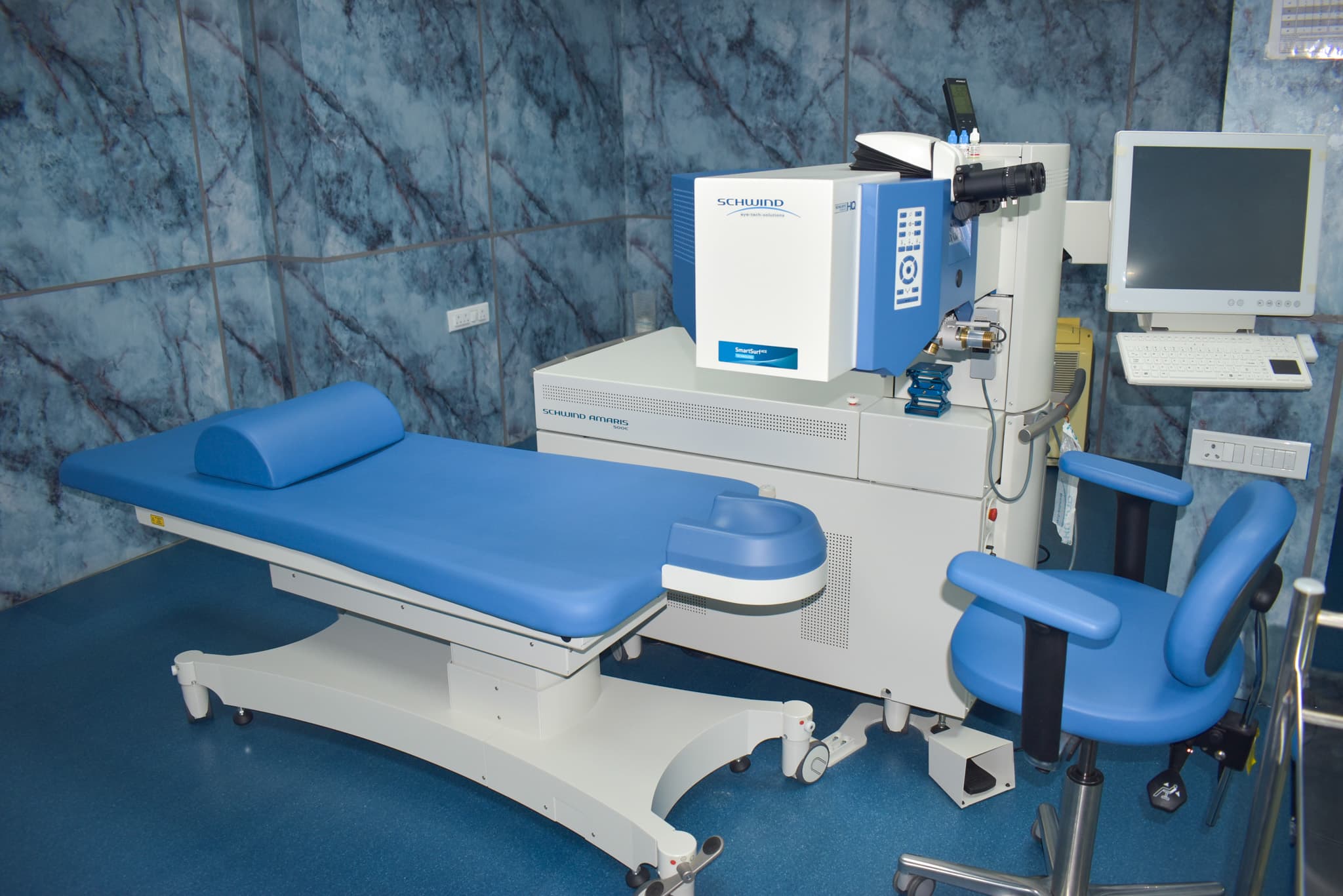
Implantable lens options for patients with high refractive power where laser correction may not be ideal.
High spectacle number
Unsuitable laser profile
Poor contact lens tolerance
Book a consultation so the team can guide diagnostics, eligibility, treatment options, and follow-up based on your specific eye condition.
Open each question for a simple answer before your consultation. Final suitability still depends on your eye measurements and doctor advice.
Short-form topics for patients comparing glasses-removal options, eligibility, recovery, and common fears.
LASIK can greatly reduce dependence on glasses in suitable eyes, but no ethical surgeon should promise permanent perfect unaided vision. Results depend on number stability, corneal shape, dry eye status, age, healing, and future natural eye changes.
Numbing drops are used, so patients usually feel pressure, light, water, or touch rather than sharp pain. Anxiety is common because the eye is open, but the laser portion is usually brief and the team guides the patient throughout.
From a patient point of view, the process usually feels like lying under a microscope light, keeping focus on a target, feeling brief pressure, and then having the laser applied for seconds. Preparation and counselling take longer than the laser itself.
The biggest myth is that LASIK is suitable for everyone who wears glasses. Suitability depends on corneal thickness, corneal mapping, dry eye, prescription stability, age, lifestyle, and retina findings where needed.
People may be unsuitable because of thin or irregular corneas, keratoconus risk, unstable number, severe dry eye, certain autoimmune conditions, pregnancy-related changes, uncontrolled diabetes, or unrealistic expectations.
LASIK creates a flap, SMILE removes a lenticule through a small incision, and PRK or Trans PRK treats the corneal surface without a flap. The safest option is chosen after scans, not by popularity or marketing alone.
A small instrument keeps the eyelids open, and modern laser systems include tracking features. Patients should still follow instructions, but ordinary blinking fear is usually handled by the surgical setup.
Some patients can have regression, residual number, dry-eye-related blur, or age-related reading glasses later. LASIK changes corneal shape, but it does not stop natural ageing, cataract, presbyopia, or other eye disease.
At 18, number stability must be checked carefully because prescriptions can still change. At 35, stability may be better, but dry eye, lifestyle, and future reading-glasses age should be discussed before surgery.
Pilots and defence candidates often ask about laser vision correction because unaided vision and spectacle independence can matter for work. Final fitness depends on the specific authority rules, healing, and complete eye findings.
Some patients notice glare, halos, dryness, or night-vision fluctuation during healing. Good screening, pupil assessment, prescription planning, and dry-eye management reduce risk, but symptoms should be discussed honestly before surgery.
Many LASIK patients see better quickly, but vision can fluctuate for days or weeks. Drops, avoiding eye rubbing, hygiene, follow-ups, and doctor instructions are important even when vision feels good early.
Screen use is usually limited at first because blinking reduces and dryness can worsen. The surgeon gives a schedule based on the procedure, surface health, job needs, and healing response.
Possible issues include dry eye, glare, halos, residual number, regression, flap-related problems, infection, inflammation, or reduced quality of vision. Serious problems are uncommon but screening and follow-up are essential.
Celebrity stories can make LASIK look simple, but each eye is different. A safe decision should be based on medical measurements, surgeon counselling, and realistic expectations rather than famous before-and-after examples.
A simulation can show how blur may reduce after treatment, but it cannot predict the exact result. Final vision depends on prescription, cornea, healing, dry eye, retina health, and brain adaptation.
Excimer lasers remove microscopic corneal tissue in a planned pattern to change how light focuses on the retina. The treatment plan is based on prescription and corneal measurements.
Common fears include pain, blinking, moving, losing vision, and long recovery. These are addressed with numbing drops, eyelid support, eye tracking, sterile protocol, careful screening, and clear post-operative instructions.
During LASIK, numbing drops usually prevent sharp pain. Some pressure or discomfort can occur, and dryness or irritation may happen after surgery. Severe pain should be reported promptly.
The most important point is that surgery starts with saying no when the eye is not suitable. Dry eye care, realistic expectations, follow-ups, and future reading-glasses age matter as much as the laser day.
Share the basics and continue on WhatsApp, or call the hospital directly if you need urgent scheduling help.